Teaching
My pedagogy includes hands-on engagement with local foodways and food experiences. From in-class tastings, visits to nearby farms and food establishments, and ongoing food journals or mini-ethnography projects, students apply readings and other materials to their own lives and lived experiences. My activities and assessments are methodologically centered so that students engage with anthropological approaches that are not only disciplinary oriented but also prepare them with useful skills for their future careers, like interviewing, surveying, and data documentation. I also work closely with student to improve their writing and public-speaking skills.
I have extensive experience teaching Food Studies-related courses for undergraduates and leading study abroad courses in Tbilisi, Georgia, and Berlin, Germany. I am trained in writing pedagogy and have over four years of teaching assistant experience across all sub-disciplines of Anthropology.
Food & Politics
Randolph-Macon College (RMC)
Spring 2026, Fall 2026 (current)
This is an anthropology course, but it is listed under the joint Sociology-Criminology-Anthropology department. Given the interdisciplinary nature of the program, I designed this course to reach into all three disciplines. Students complete a semester-long Food Journal to become familiar with various anthropological approaches. Many of the readings focus on US-related topics, such as food histories of tacos and pineapples, which help students relate to the readings and their own lived experiences. Lastly, I dedicate units to food justice and access, not only for their importance, but to show the interconnectedness of the three disciplines in our department. Throughout the course, we do in-class activities and tastings, including a blind water tasting and the making of “spreads.” I also facilitate excursions to local food establishments like a farm-to-table restaurant and a local farm. As a secondary assessment, students compose three reflective essays throughout the semester and frequently do in-class group research and presentations on global foodways.
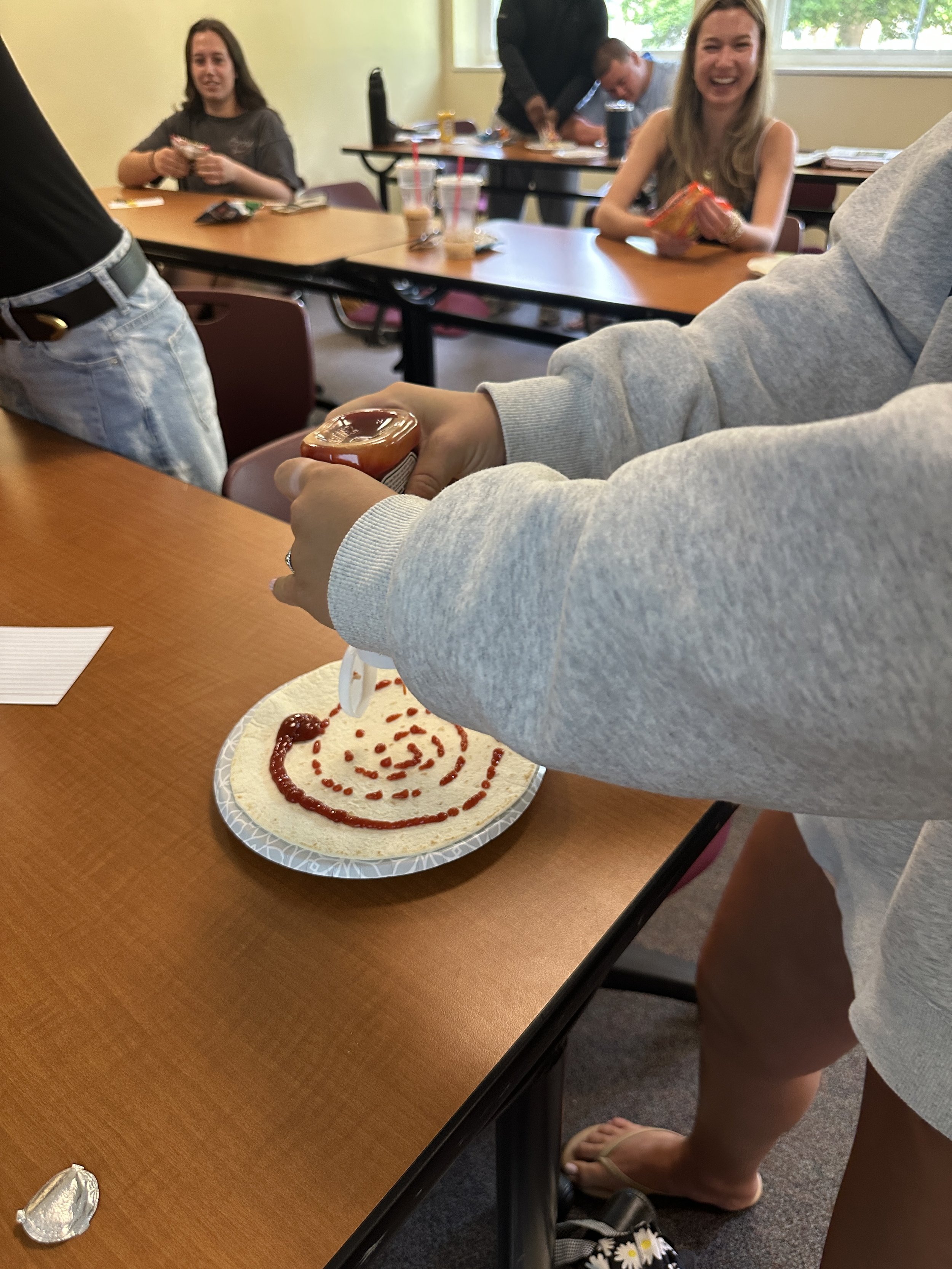
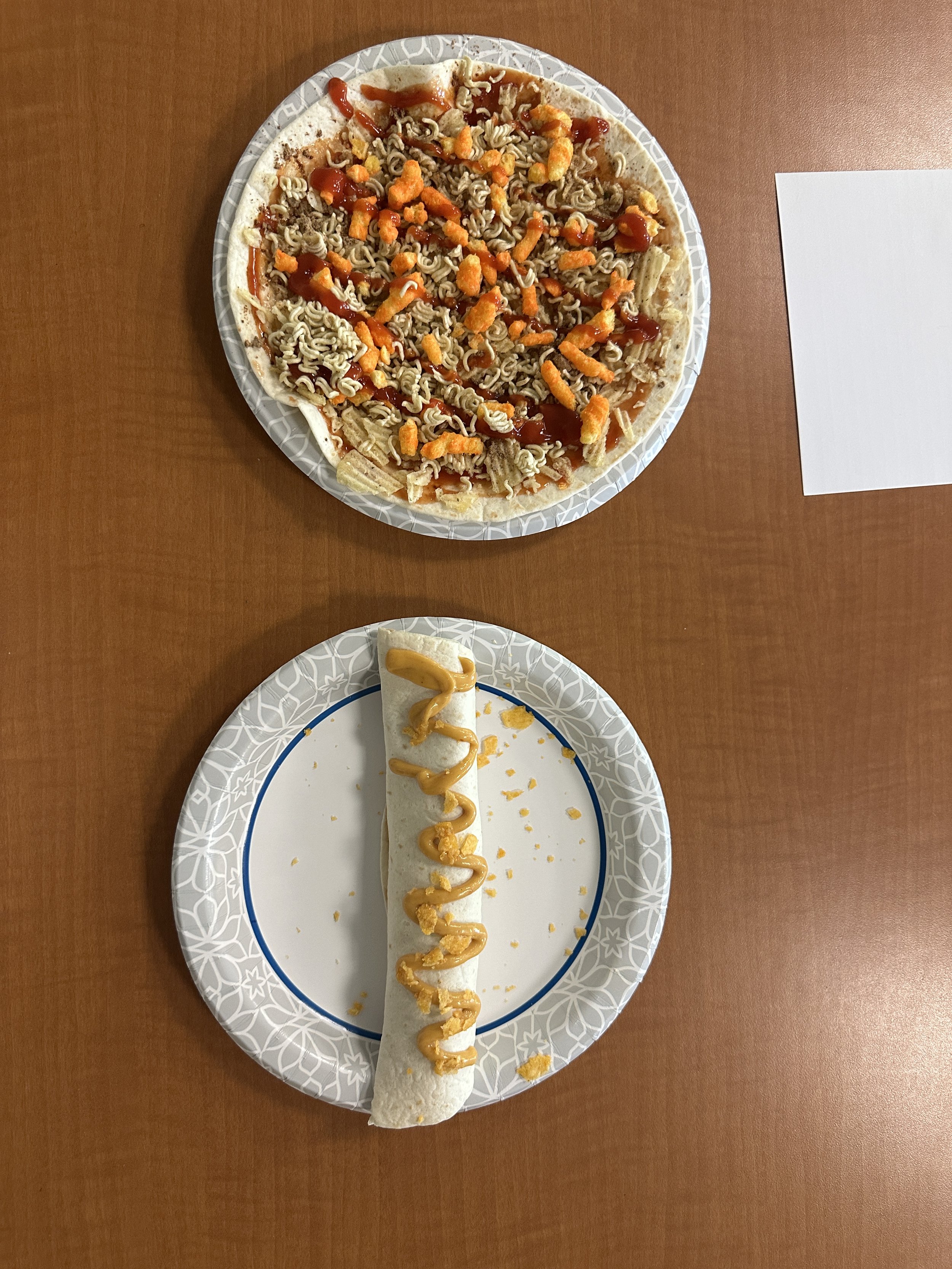
In-Class Food Creation and Tastings
Students created “spreads” from limited ingredients to understand the foodways of incarcerated people; students had the opportunity to taste different spreads. Other in-class tastings include cheese, homemade sourdough bread, and a blind water tasting. I frequently bring in baked goods and we end the course with a class potluck.
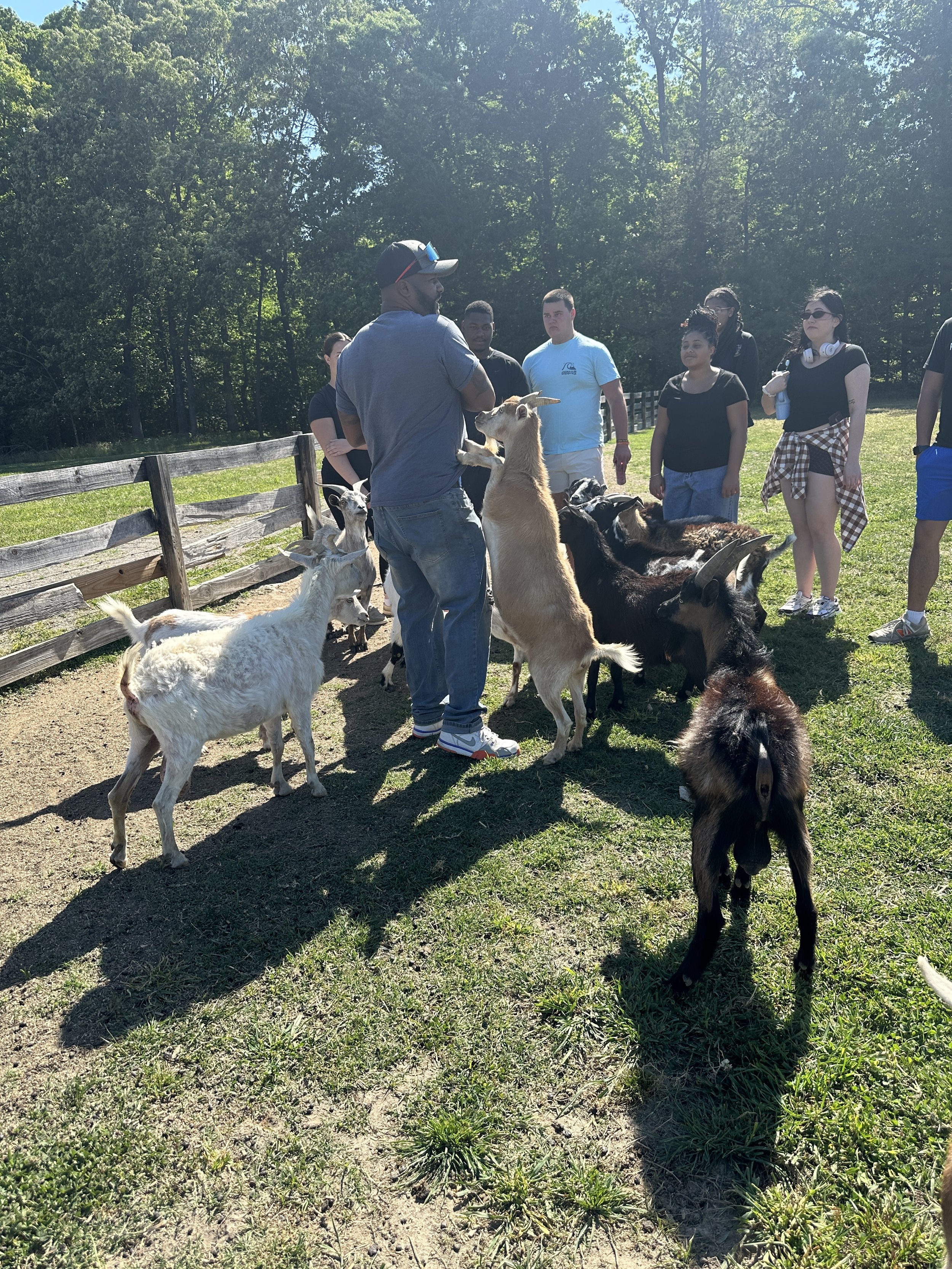
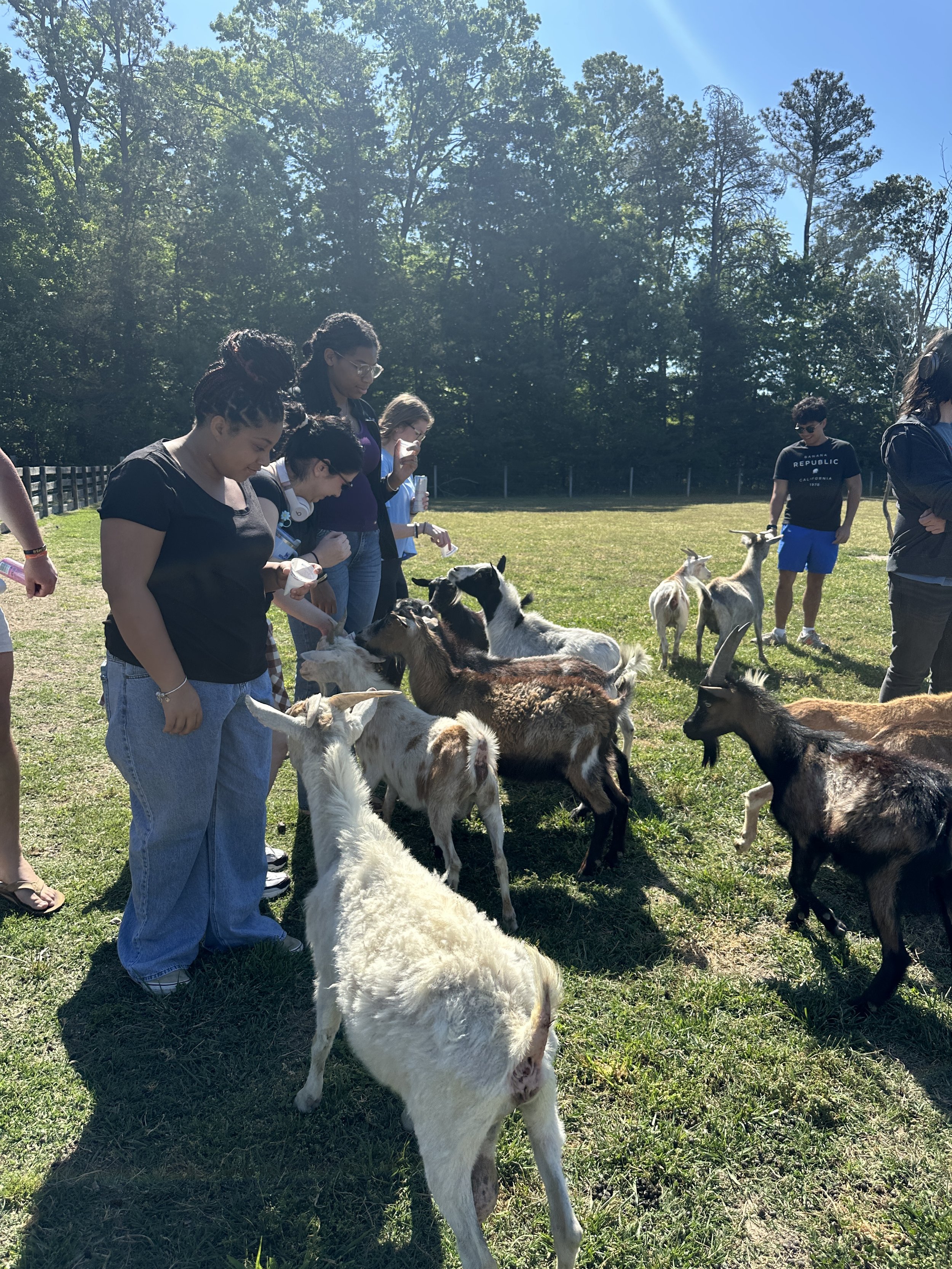
Local Food Visits
Local visits to food and farming establishments is a crucial part of this course. Together with students we visit at least one farm (weather dependent) and a few food establishments in the nearby town. We hear from local business owners on how they manage farm-to-table supply chains, biodiverse ecosystems, and consumer tendencies. At this particular farm, students got to feed goats, plant some vegetable seeds, and enjoyed a short egg race — all the makings of a fall farm experience.
Anthropology of Food
University of Richmond
Summer 2026
Study abroad course in Tbilisi, Georgia
I designed this five-week course based on my previous semester course in Tbilisi (see below). For this iteration, given the time constraints, readings and materials were heavily focused on Georgia and the so-called former Soviet space. I curated the course in this way to encourage students to dive deeply into their study abroad experiences. Each week, outside of the classroom, we had an additional food excursion. During the course, students participated in numerous masterclasses, learning to make Khinkhali and Churchela. We did a market tour, a film screening, multiple wine tastings, visits to food museums, and food-focused day trips to regions near Tbilisi.
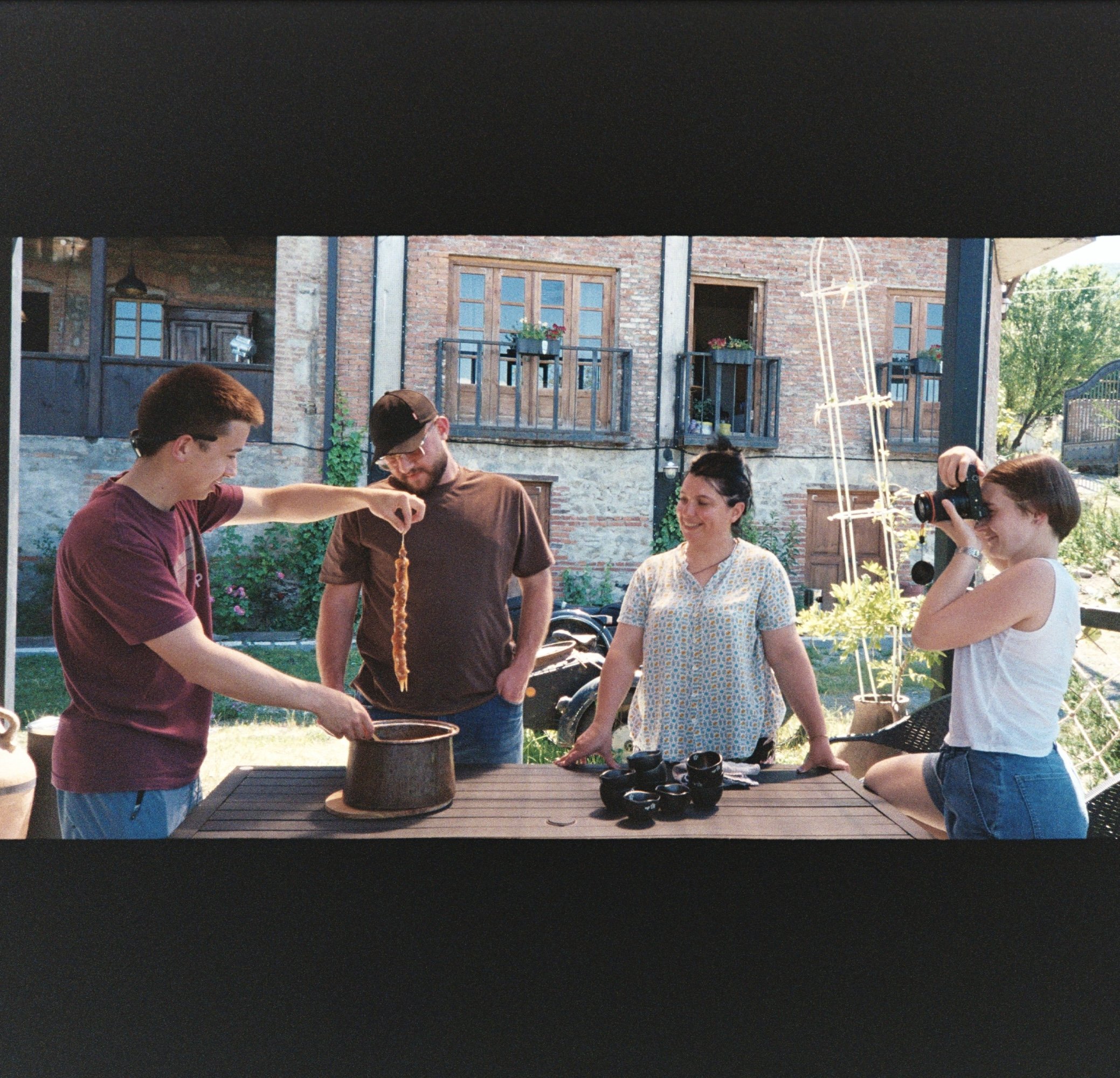
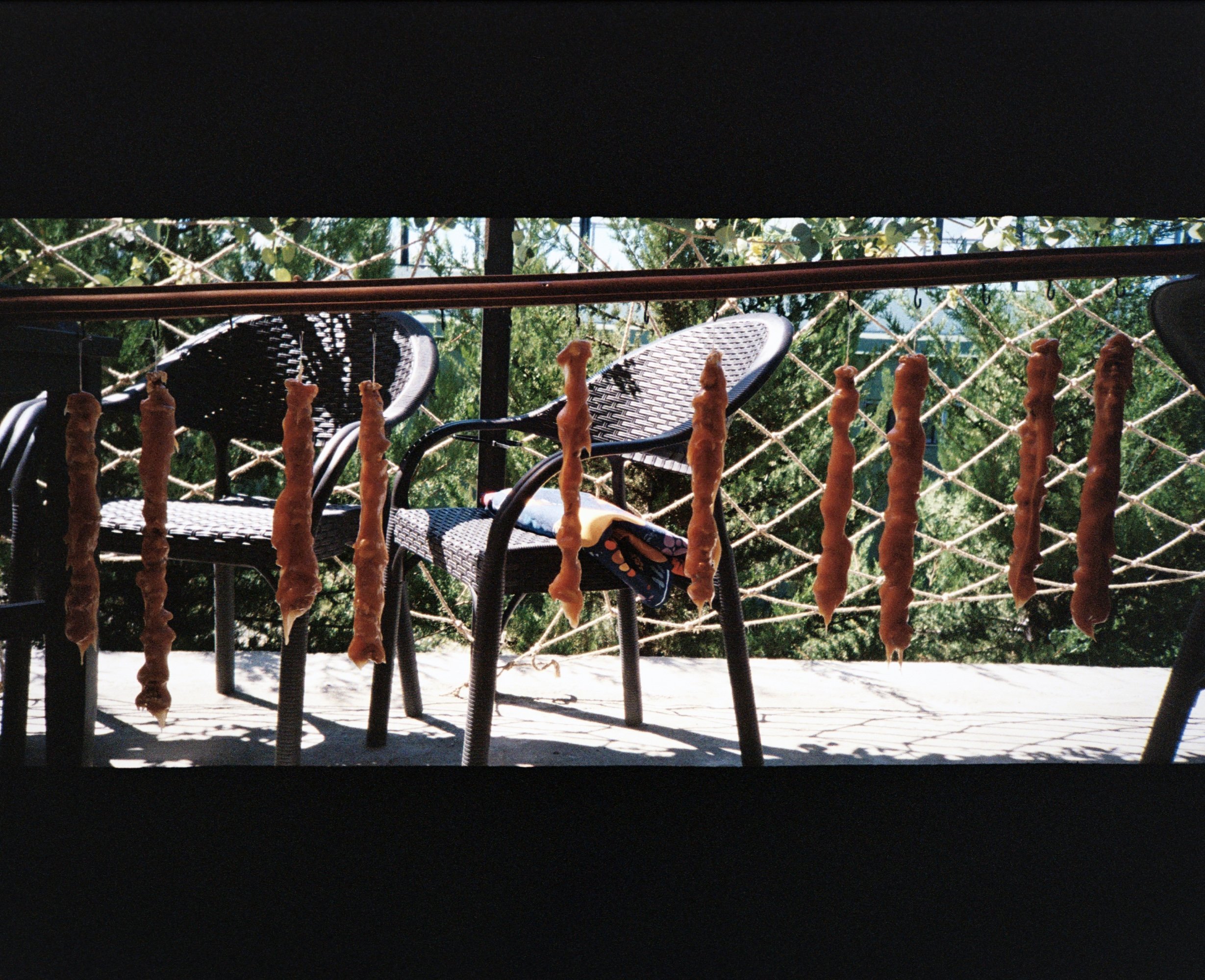
Churchela-Making
Students made a Georgia “dessert” at a winery and guesthouse in the region of Kakheti
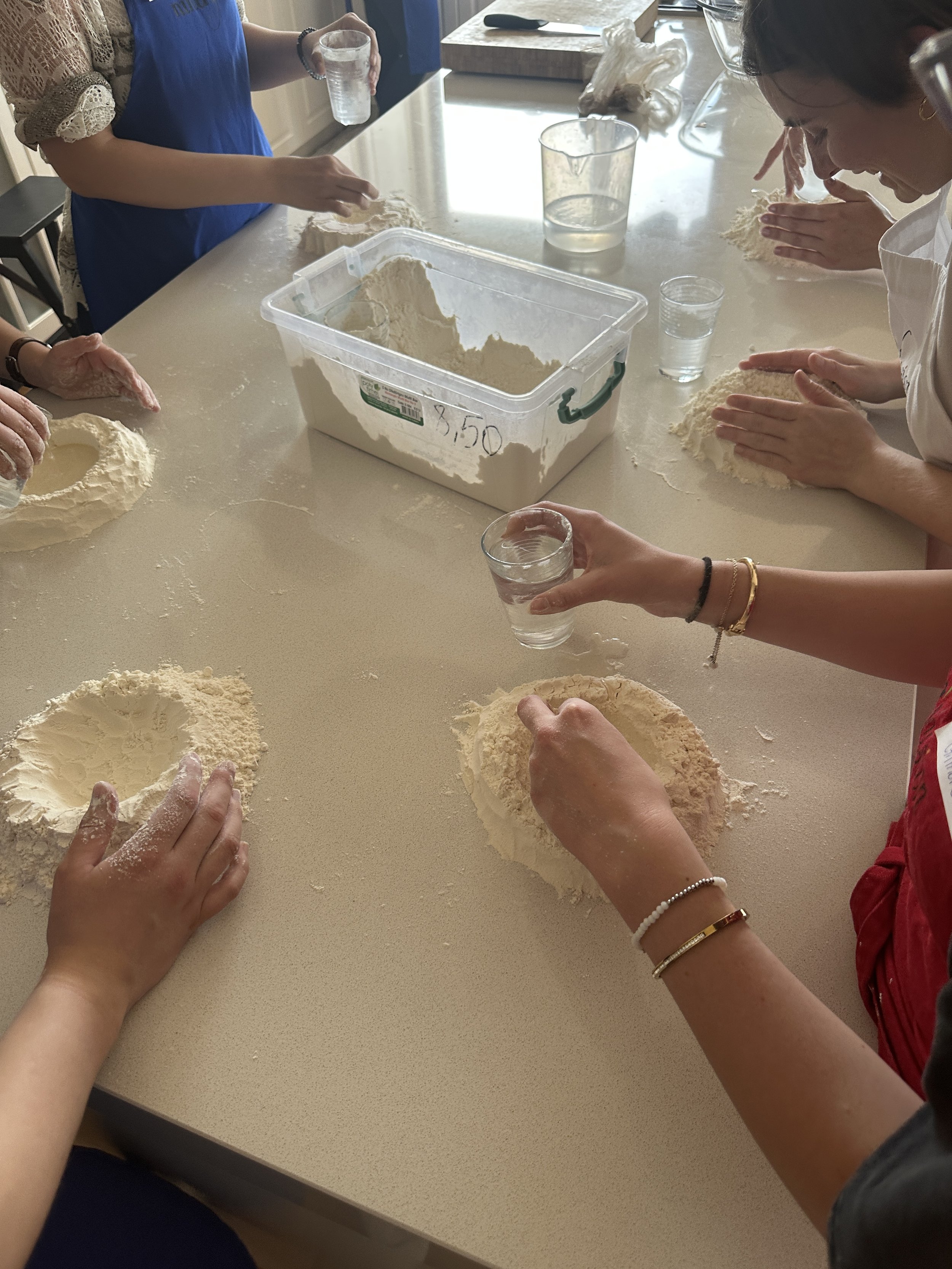
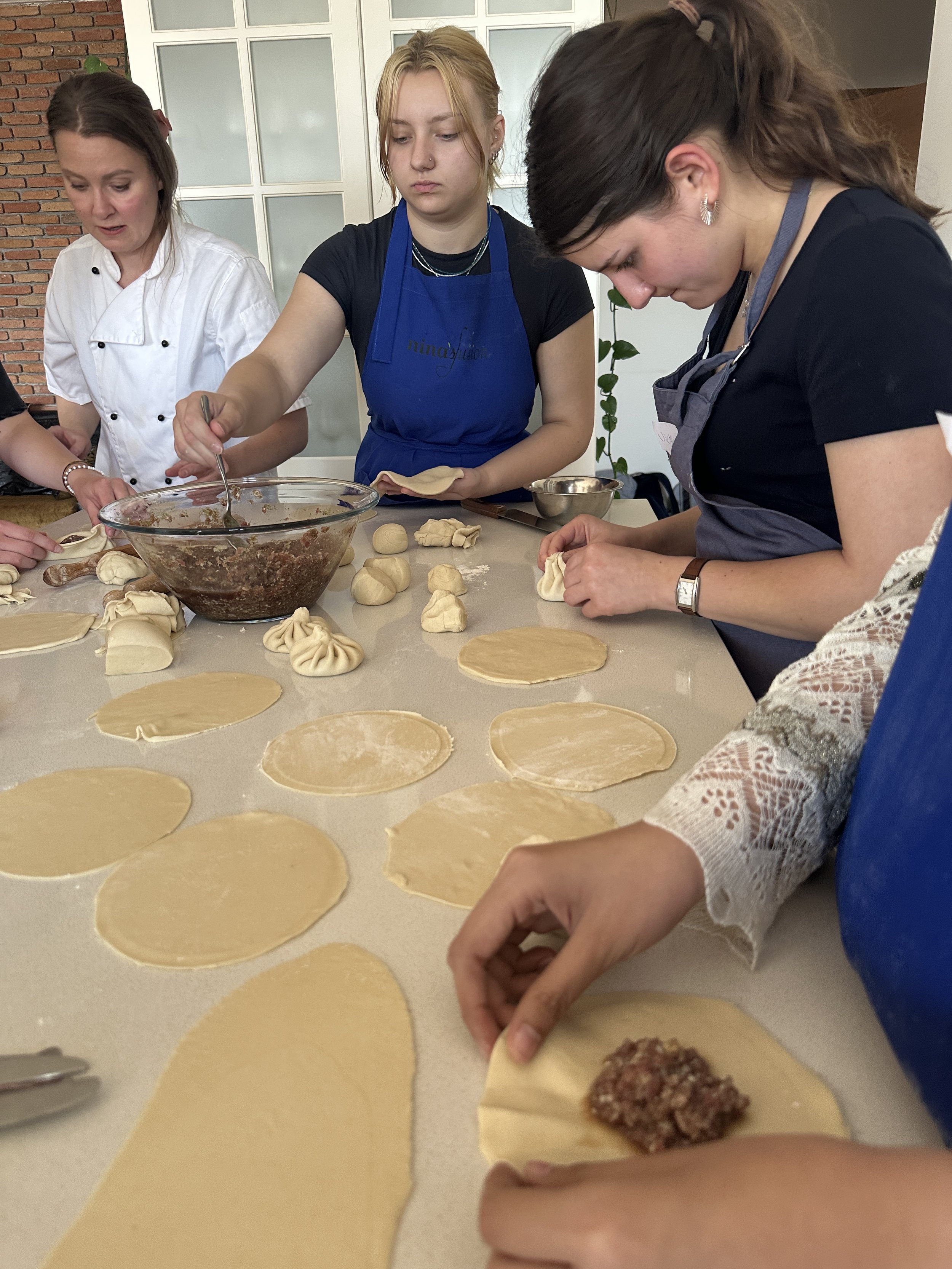
Khinkhali Master Class
Students learned how to make traditional Georgian dumplings, Khinkhali, from a local, professional chef
Food-Focused Day-Trips
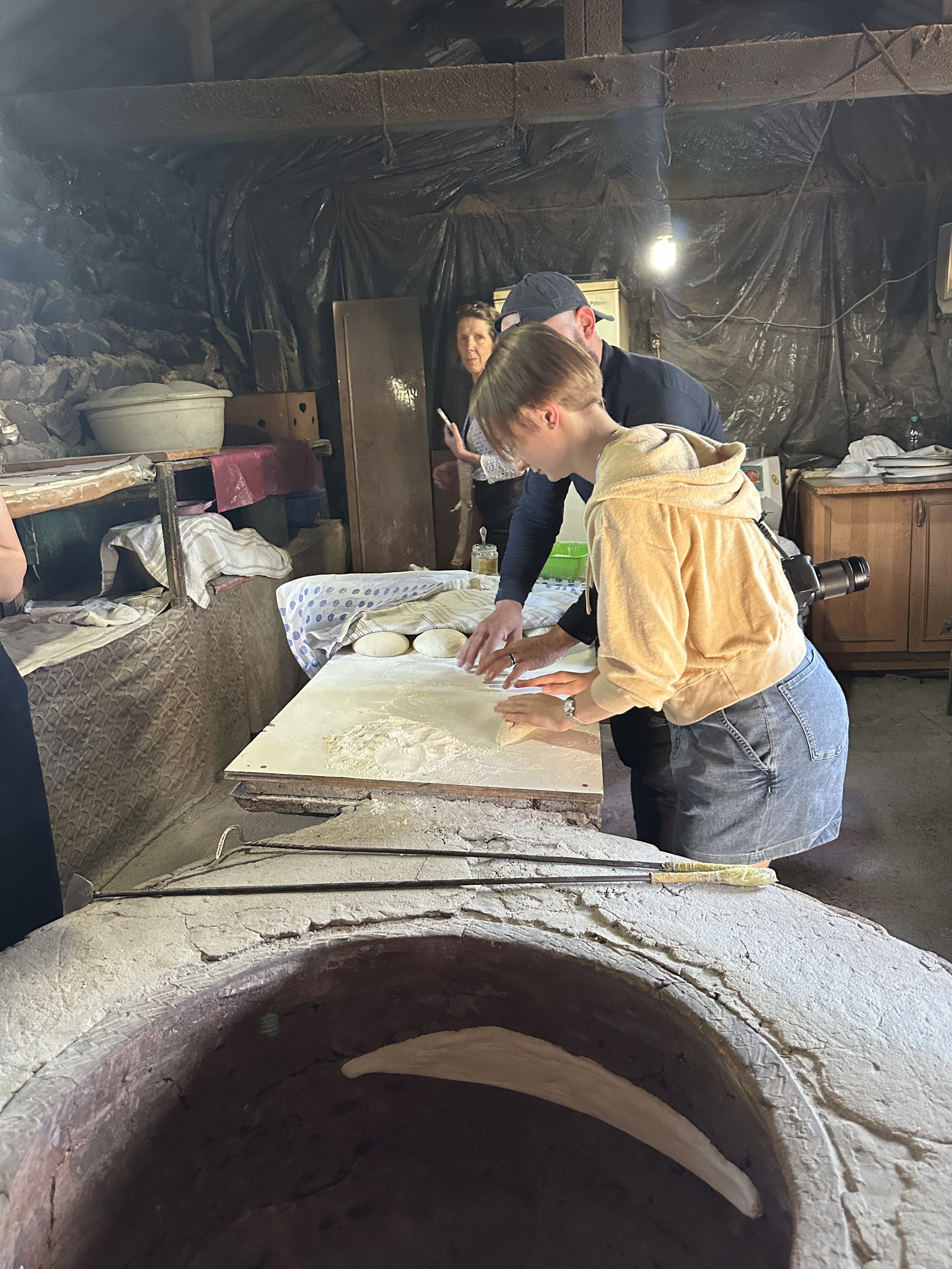
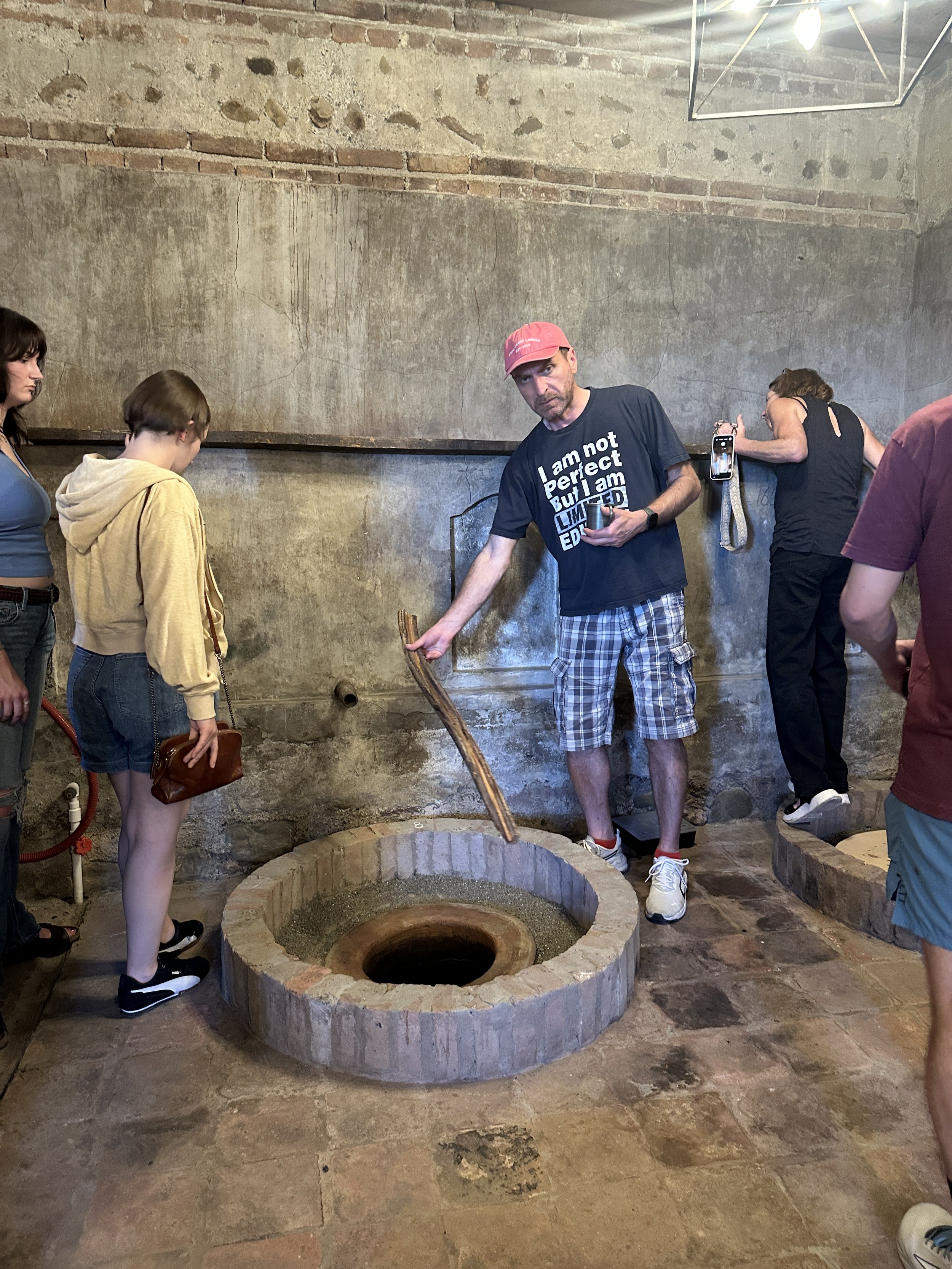
Along with SRAS, I coordinated a day-trip to Kakheti. Students started the trip with a stop at a traditional baker, whose craft is a special Shotis Puri. After, students visited a winery that is a historic, Ottoman-era estate, where they got a winery tour from the natural winemaker, Kaka. The day trip ended with a cheese tasting at a local Georgian producer who makes European style cheeses in the Georgian mountains; some milk comes from cows imported from Switzerland.
Food Fight! The Intersection of Food & Politics
The School of Russian & Asian Studies
Fall Semester 2024
Study abroad course in Tbilisi, Georgia
I designed this course to teach students anthropological methods over the course of a semester, and for them to use the vibrant foodways of Tbilisi as their object of investigation. Throughout the semester, students engaged in mini-ethnographies with each week’s prompt focusing on a different anthropological method. We also engaged in different food activities, such as a cooking class, a weekend trip that was heavily food-focused, and museum tours. This course was tailored for a group of students from different universities across the United States from various disciplines.
Food Museum Visits
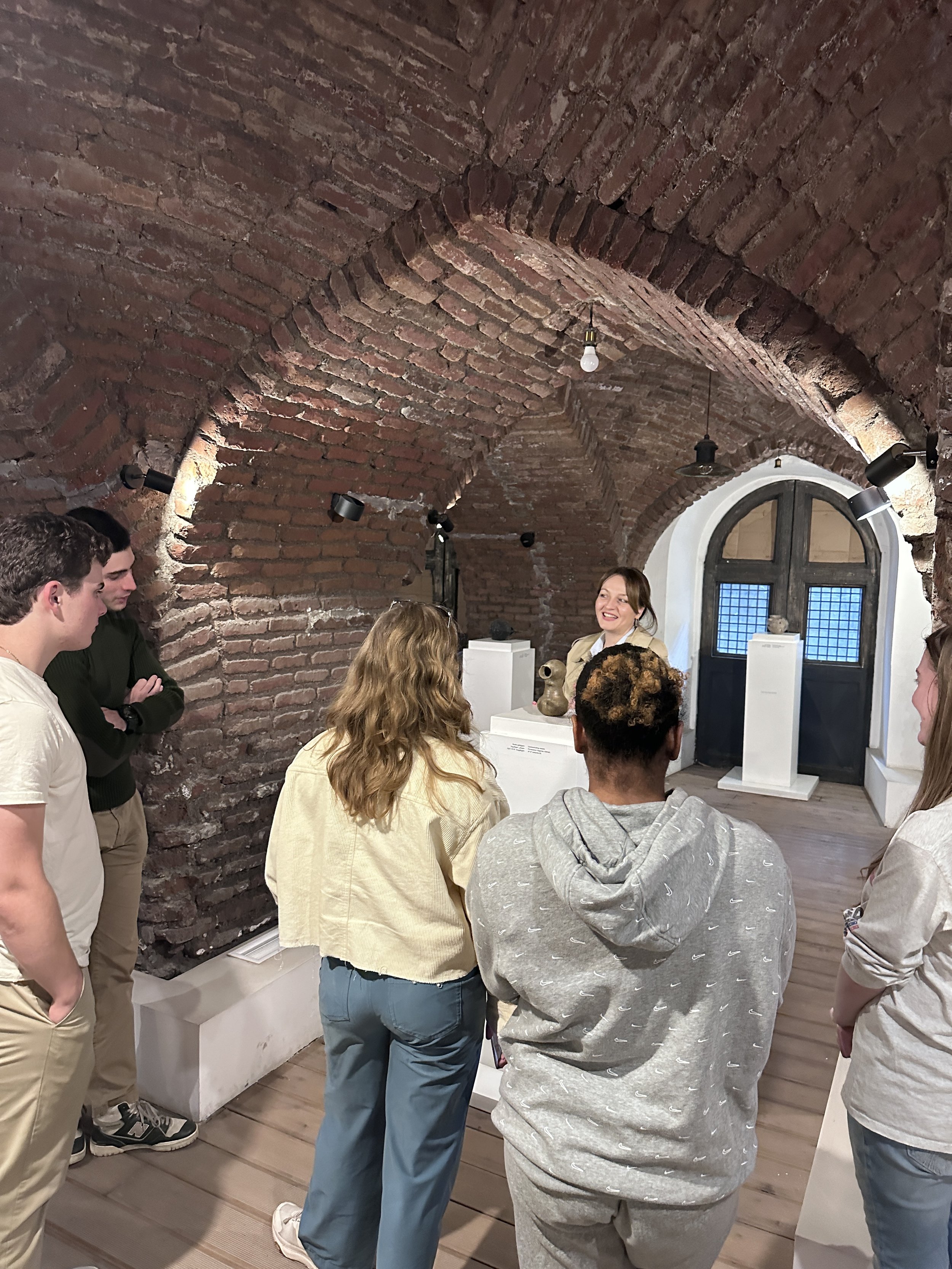
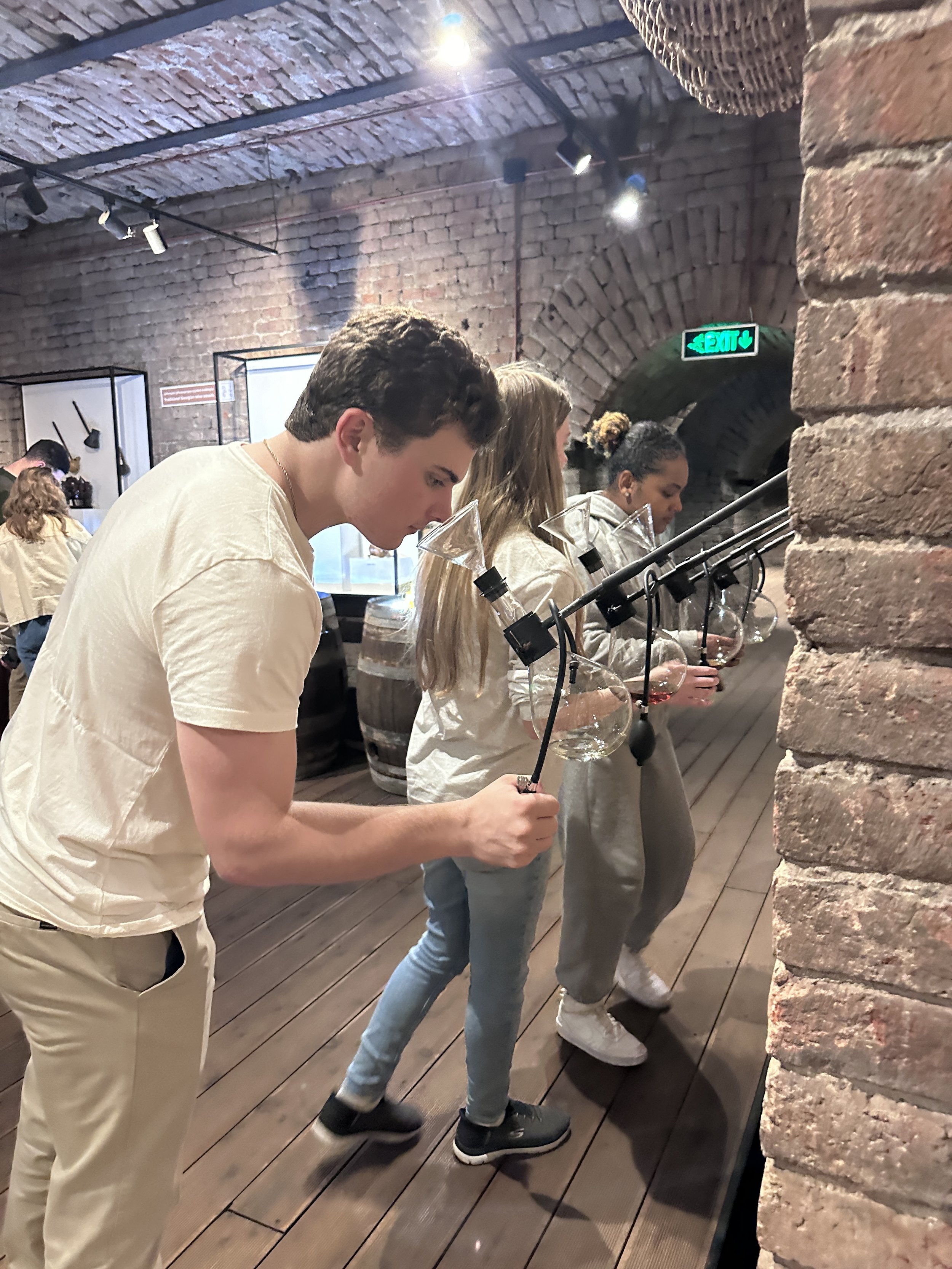
In addition to course lectures, we had excursions around once a month. One excursion I always chose is a visit to the Wine Museum in Tbilisi. Here students learn the history of Georgian wine, which dates back 8,000 years. They get to explore the smells of wine, how Georgian wine is traditionally made, and now they also get to try on Medieval gear and weaponry (not wine-related but a recent museum add-on that has become a hit!).
Weekend Food-Focused Trip
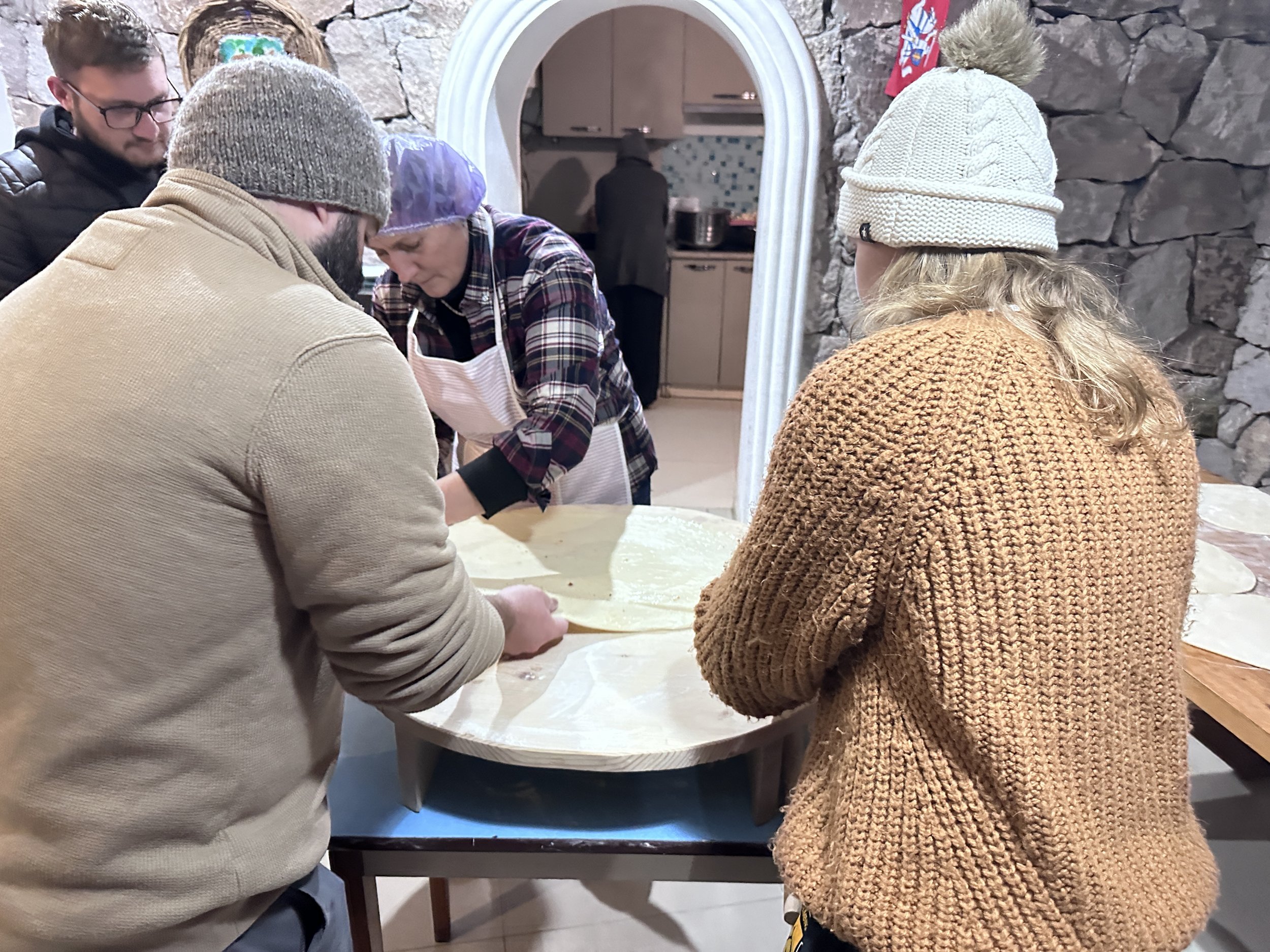
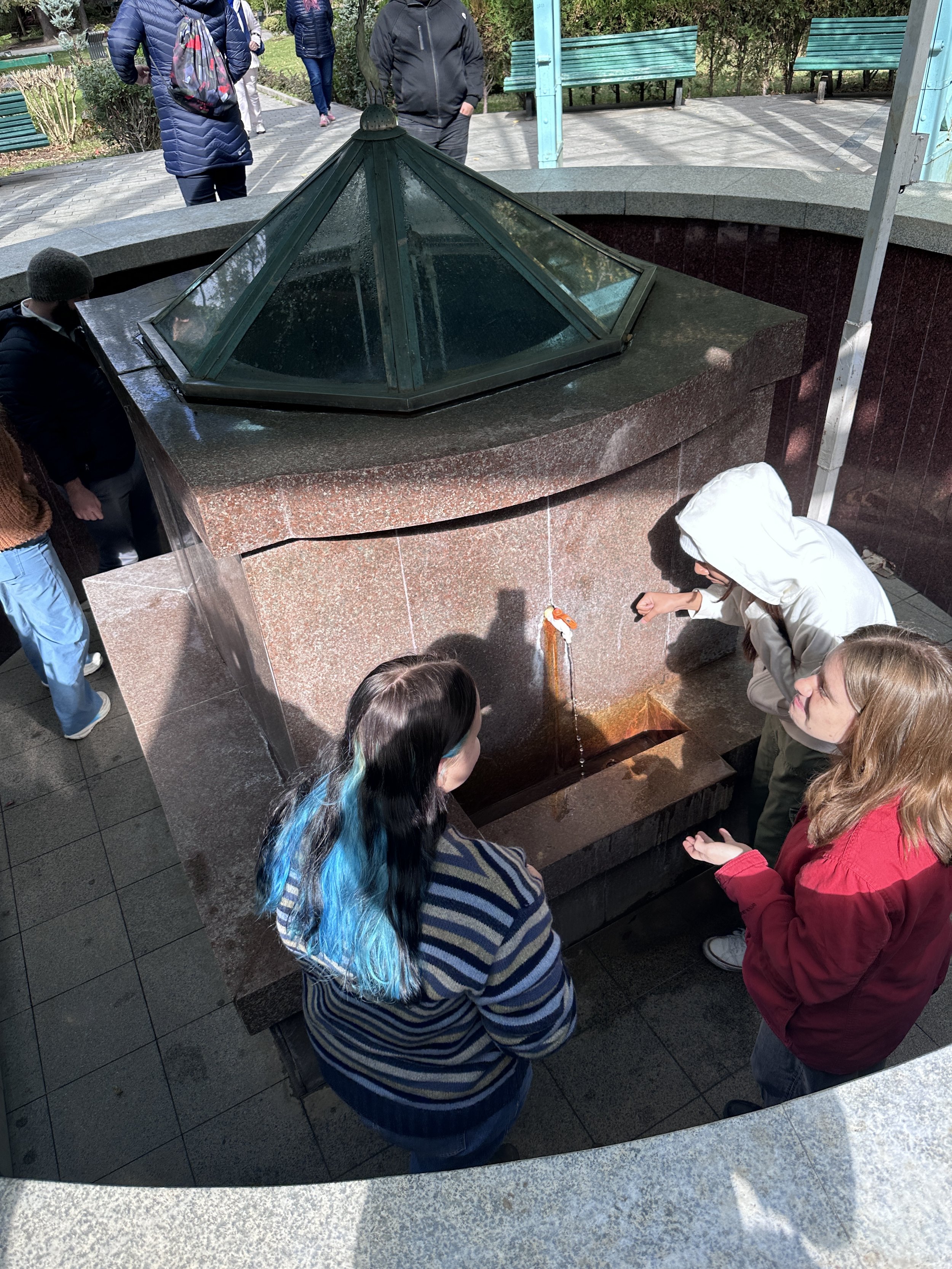
Students took a weekend trip to the region of Samtskhe-Javakheti, home of the famous healing mineral waters, Borjomi, and unique Meskhetian cuisine. Students were able to taste different mineral waters and make Meskhetian Khachapuri as well as local dishes that feature snails and homemade cheeses. This region is particularly important for food politics as not only is it one of the most distinctive cuisines in Georgia’s regions, but the region has deep and contentious ethno-religious politics which impacts its foodways and food histories.
Emphasis on Taste
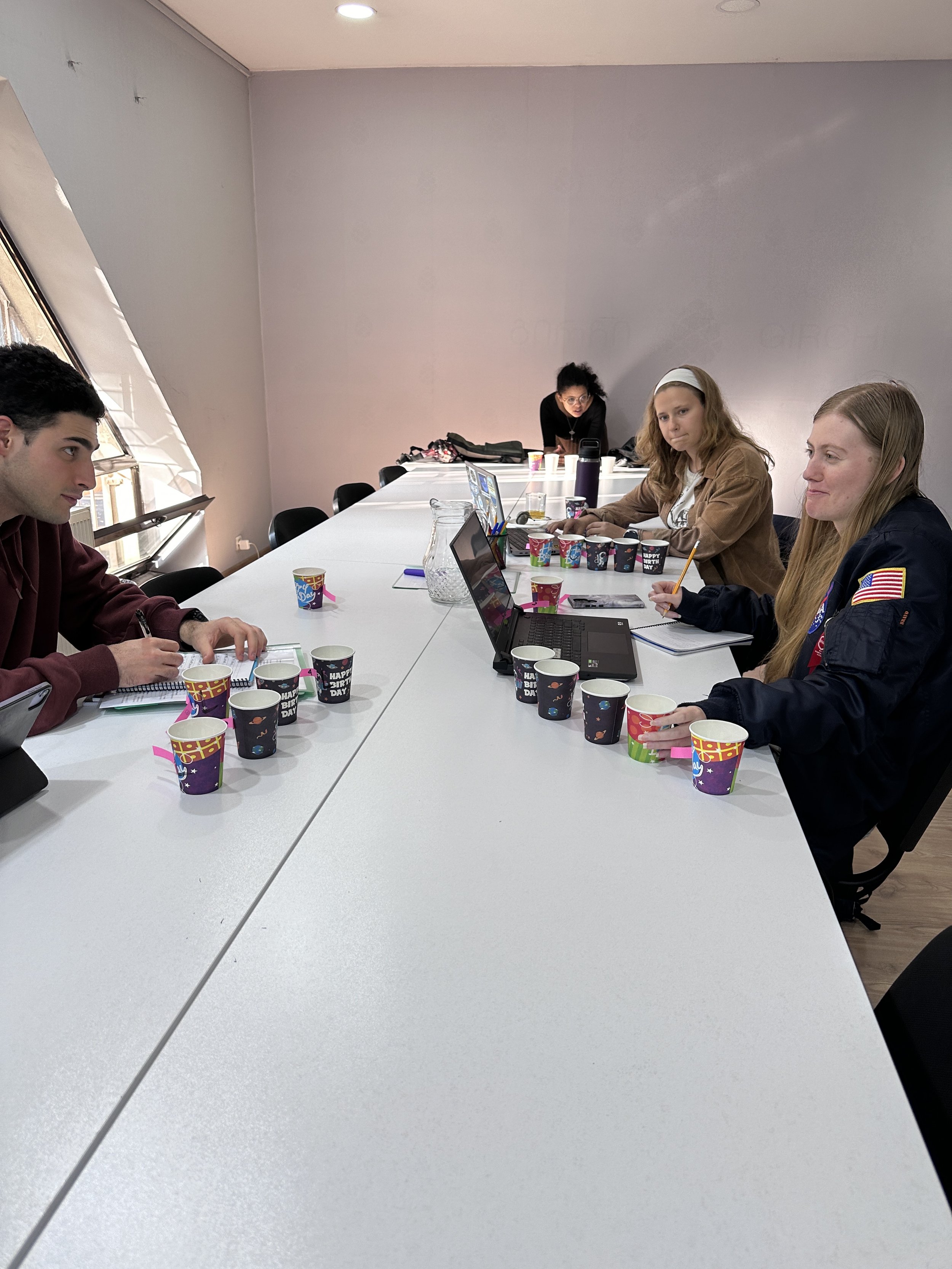
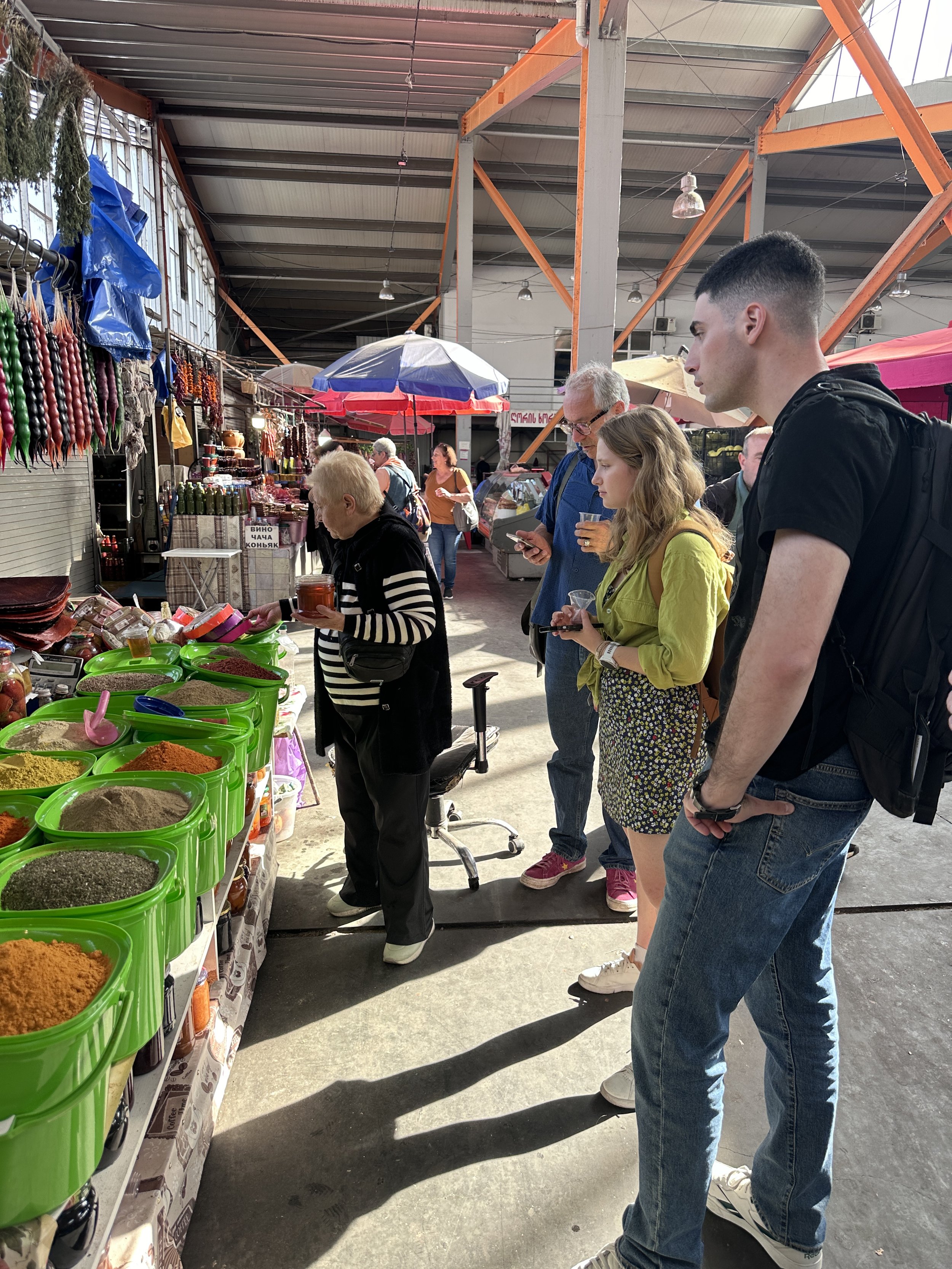
During the semester students really pushed their senses of taste. One of my favorite activities is having students blind-taste waters. Not only do they come to realize they can taste differences in waters, even in foreign countries, but they come to learn more about their own taste politics and the politics of water production. In Tbilisi, I also enjoy taking students on a in-depth excursion of the famous Dezerter’s Bazaar. At every stop they are given tastes: pickled vegetables, spices, cheeses, breads, and even homemade vodka, or chacha. It’s an ideal location for students to learn about Tbilisi food histories, as the market has its stories and violent histories, but also to learn about the many flavors of Tbilisi, how economic exchange operates, and the socioeconomic dynamics of trade spaces.